

It has not always been easy for me to navigate the world as a black African woman, especially because I never felt like I fit into the traditional norms of what that means. Growing up in Cameroon, I often heard that I behaved as if I were white. Traits like sensitivity, independence, intellectualism, and high agency are typically associated with whiteness. These traits might have been understandable if I had grown up as an immigrant in a Western country and somewhat assimilated some of these traits. However, I was born and raised in an urban village in Douala, spending most of my childhood holidays in my mother’s forest village. There, I lived in a mud house, spent most of my days in fields, carried water from the river on my head, and played freely in the wood. Both my parents came from a chiefdom family, so I grew up immersed in traditional values. This background confused people who couldn’t understand my traits, making it difficult for them to accept them in me. I was told that no true African man would want to marry or put up with such a “difficult and complicated woman.” I have found this way of thinking very reductionist and even insulting, not just to men, but to African people in general; their rich and expansive nature reduced to such stereotypes.
When I moved to Senegal, my African identity was again questioned. People wondered why I did speak with an ancent that does not sound cameroonian or why I do certain things like white people, such as as not dressing traditionally or enjoying white people music. They didn’t know my father’s diverse musical tastes influenced me. Comments suggested I was erasing my blackness and Africanness, especially being married to a white man. But I’ve always been this way.
Now in Canada, my identity is questioned again. Here, apparently I am « too black. » This made me reflect on what being black means, having been accused of not being black enough before.
I often feel uneasy when I find myself in conversations about identities. This discomfort arises from the fact that most of these discussions begin with the assumption that identities are fixed, or that they have a single, universally shared meaning within a specific group or culture, and that any deviation is merely a result of acculturation. This perspective disregards individual personality, personal values, and agency, particularly for independent thinkers and individuals with strong agency. Instead, it emphasizes conformity and surface-level aspects, promoting a narrow view that can be distressing for those who don’t conform to societal norms.
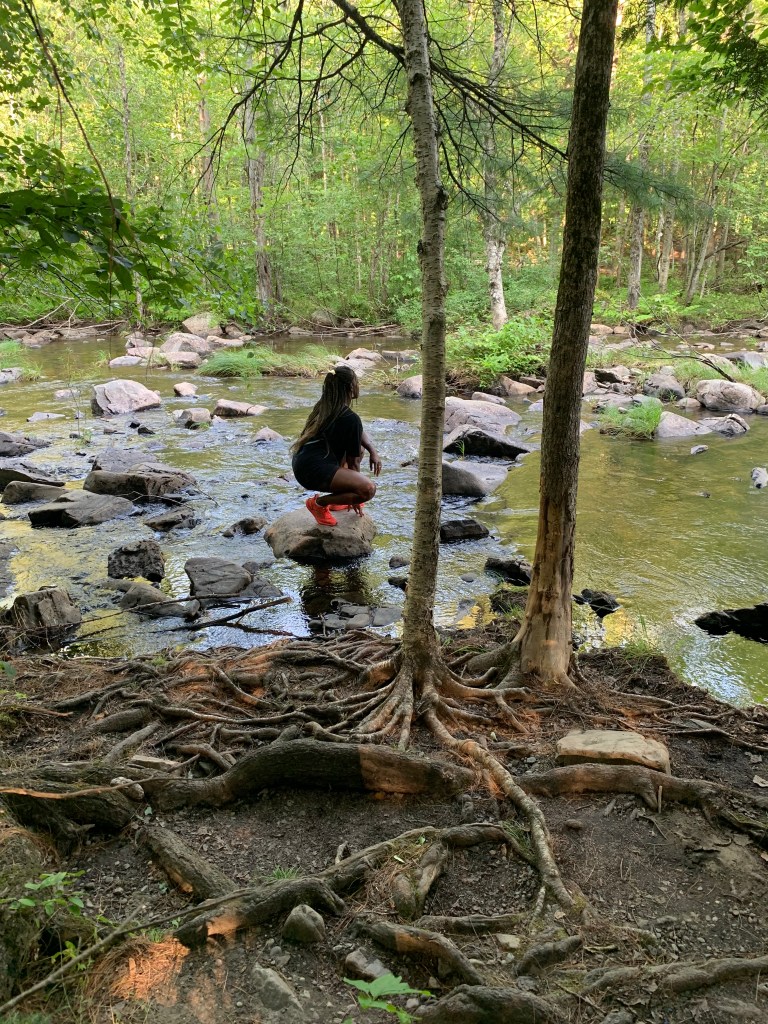
I deeply identify as black and African. I value the wisdom of our ancient teachings, our food, dances, stories, and arts. I hold dear the sense of community and simplicity from my maternal grandparents’ village. My time spent in nature has left a lasting mark on me. Even today, I seek out the village, nature, and simplicity to reconnect with myself. While I recognize how these experiences have shaped me, there is more to me beyond these identities. I wish for others to see me, Rachel-Diane, in all my complexities and contradictions.
Identity is singular, yet it is composed of multiple elements. Reducing a person to just one or a few aspects of their identity is dangerous and dehumanizing, as it fragments their wholeness and overlook their complexity. Viewing identity as multifaceted shouldn’t imply a fragmented human being. Instead, it should highlight the unity within this multiplicity. When we fail to see people as a whole, we do them a disservice, committing a form of violence by refusing to acknowledge their complete humanity. Recognizing and honoring the entirety of a person is essential to truly understand and respect their identity.
I am aware that feeling seen, even if it is a fundamental need, represents a risk in a society that exploits people’s vulnerabilities. Authenticity is challenging to maintain in a reality that demands conformity. My focus is on recognizing and honoring the entirety of a person and the importance of curiosity and openness. We must acknowledge our tendency to categorize and set the intention to remain open to the idea that what we know is only an aspect of a person and to resist reducing them to that partial understanding.
Navigating the world as my authentic self is becoming easier, though it remains a journey. I’ve learned that the most important work is to understand and know ourselves, to see ourselves as a whole. By being clear about our identity and embracing our complexities, we can withstand others’ perceptions and stand firm in our authenticity. When we are confident in who we are, we can communicate our true selves effectively, and over time, the world will adjust to accommodate this clarity.
“Be you, the world will adjust”
R-D
 uninstantdemoi.com
Laisser un commentaire