
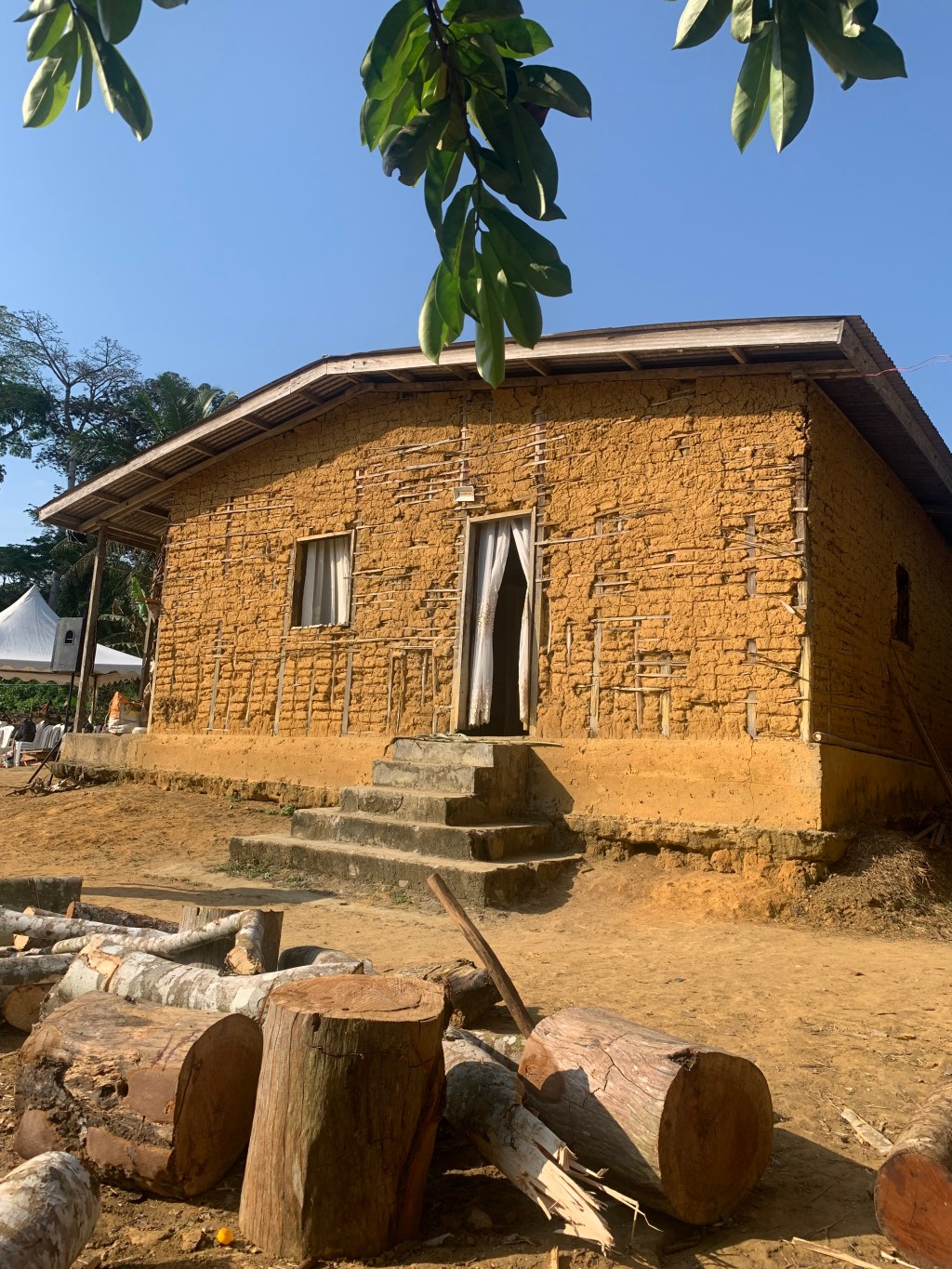
There was euphoria surrounding my brother’s birth. The entire village celebrated the long overdue arrival of a boy in our family. After five daughters, my father finally had HIS son. That day, for the first time, I was confronted with the reality that, through our cultural lens or perhaps in our subconscious boys seemed to hold more value than girls.
It struck me deeply because, as a child, I believed my parents were quite progressive compared to those around us. Until my brother was born, I had never questioned or compared how boys and girls were treated in our household. As daughters, there were five of us, we were allowed to play any kind of games, dress how we liked, dream big, attend school, pursue our ambitions, and even choose not to marry, if that was our decision.
However, my brother’s birth reminded me that there was still one significant difference: we could not carry our father’s name or legacy.In our culture, girls and their children traditionally belong to their future husbands’ families. However, that was a long time ago. Now that I am 40, I wanted to believe that things have evolved, but…
Just a few days ago, I spoke with my brother, who mentioned that he would attend the village council.
I said, “That is great, it is good that everyone in the village can come together to discuss matters.” But he corrected me: “Not everyone, just the men.”
Surprised, I said, “Oh, I thought you meant the village council. So, you meant the men’s council?”
He replied, “No, the village council.”
I asked, “How come?”
He sighed, clearly expecting a debate with his rebellious, justice-seeking sister, and replied, “Women have their own council.”
So I asked, “Then why do men not have their own council? Why is theirs called the village council?”
He said, “Because men are the heads of families. They represent the whole family.”
Now I was the one feeling annoyed. But I did not want to continue without first establishing what a family head actually means.
So I asked, “What is the role of a family head?”
He became a little more irritated, but I continued, “Can we at least agree that a family head should be someone who is trusted, who has the best intentions for the family, who is knowledgeable, credible, and skilled in leadership?”
He said yes.
Then I asked, “Do we agree that a woman can also fulfill that role? Do we agree that this role is often assigned to men regardless of their capability, simply because they are male? That in families with no sons or living fathers, leadership is often passed to an uncle, even if he is unfit, rather than to a competent woman who has repeatedly proven her leadership and abilities?”
“What about uncles who, after the death of their brothers, exploit or abuse the women in the family? How is that fair? How is that coherent or defensible? How can a village council composed entirely of men claim to represent the voices of women and children?”Who gets to speak for us?
His answer: “Diane, this is our culture.”
And I replied, “Is it really culture or is it patriarchy?”
He paused, then admitted, “Yes, we live in a patriarchal society.” But he said it as though it were something to be proud of, something natural and unchangeable.
I am tired of hearing “this is our culture” as a justification for normalizing inequality, discrimination, and indoctrination presented as tradition and wisdom. But before we go further, let us revisit what culture and tradition actually mean.
Unfortunately, if a reality is hammered into you long enough, it becomes a fact, something that can no longer be questioned or changed. I am often struck by how rarely we challenge what is. Are we more attached to the well being of our societies or to the norms, even when those norms harm us collectively? We can change them.
So, before we answer whether something is truly cultural, let us define culture itself.
At its core, culture is simply a set of shared practices, values, beliefs, and behaviors passed from one generation to another. But that does not mean they are untouchable. Cultures are not fixed; they evolve. Traditions have always shifted with time, some fade, others are replaced by more humane, fair, and inclusive practices that still preserve the essence and spirit of a society.
So, are we going to continue defending cultures that are discriminatory? We, the people, shape culture. It does not exist in a vacuum. It can be adapted, improved, and reimagined, without losing its meaning or identity.
When we protect patriarchal norms under the guise of culture, we are not preserving culture, we are preserving patriarchy. The same goes for the normalization of discrimination or abuse.
Culture becomes culture only when there is a collective agreement to act a certain way. And if that is true, then we can collectively change the agreement and build new, inclusive cultures.
In the meantime, I will remain the rebellious, justice-seeking girl (now woman) who dares to challenge the status quo. I will continue to question, to speak, and to resist the normalization of systems that silence or exclude. Like the women who came before us, I know the pushback may be slow, even discouraging. But staying quiet only helps sustain what is unfair. And I choose not to be part of that silence.
With love always,
R-D
 uninstantdemoi.com
Laisser un commentaire