
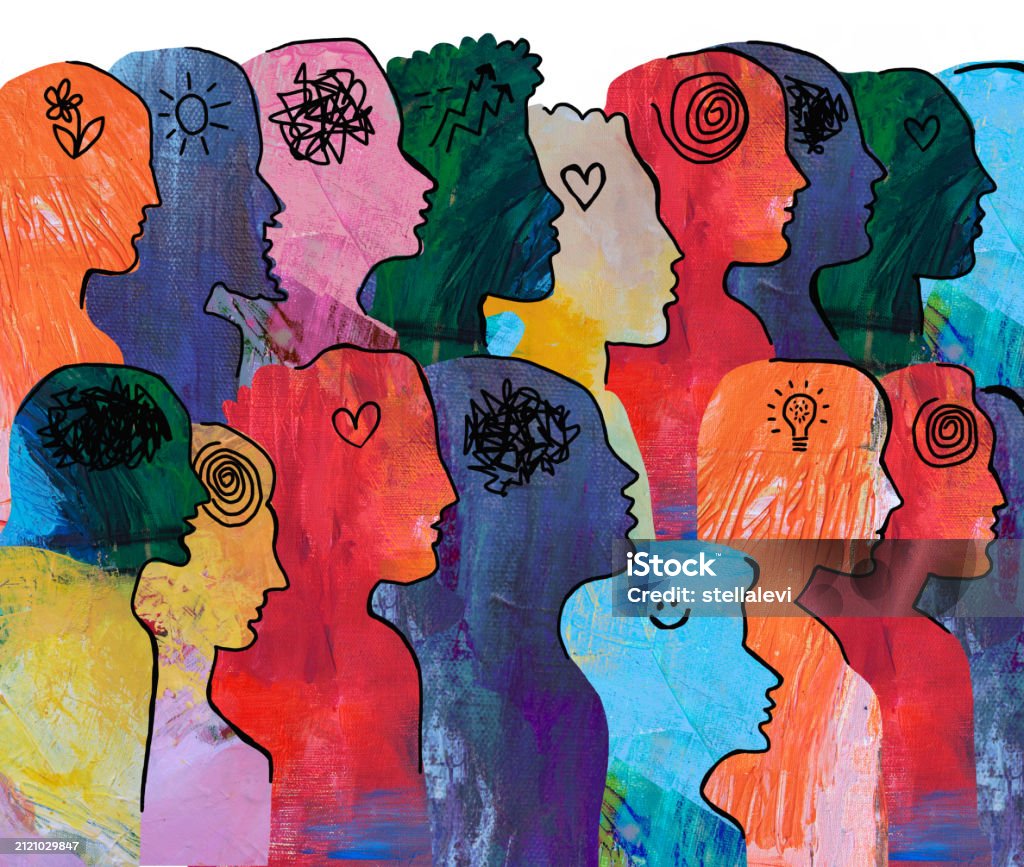
I am currently in my third year of a Bachelor’s program in psychology, and I find myself growing increasingly frustrated. Many of us entered this field with the goal of supporting specific groups or communities, however, when I bring up culturally specific experiences or question how these experiences might shape psychological processes, my concerns are often dismissed with remarks like, “This is not a cultural psychology class.”
This response reflects a deeper issue: the tendency to treat cultural perspectives as a separate, optional aspect of psychology rather than an integral part of it. The discipline is often presented as though “general psychology” is neutral, universal, and somehow devoid of cultural influence. Meanwhile, perspectives outside the Western framework are relegated to the margins under the label of “cultural psychology.”
This framing perpetuates the idea that Western norms are the default standard for psychological theories and practices, while the experiences and contexts of others are treated as deviations or special cases. The reality is that all psychology is cultural, but the West is rarely acknowledged as having its own cultural lens. This lack of inclusivity and contextual understanding limits the field’s ability to address the diverse needs of individuals and communities effectively.
The comment, “This is not a cultural psychology class,” highlight a significant gap in the teaching and understanding of psychology. As future psychologists, we must recognize that culture and its nuances are integral to our training and practice. Culture should not be relegated to a single course labeled “Cultural Psychology.” Instead, it must be embedded throughout the entire curriculum, influencing every aspect of psychological study and application.
Psychology does not exist in a vacuum. Our thoughts and behaviors are shaped by the interplay of content and context, both of which are deeply rooted in cultural influences. Yet, what is often presented as “general psychology” is framed as though it operates independently of culture. This so-called “neutral” or “universal” psychology predominantly reflects a Western perspective, positioning Western norms as the default while portraying all other cultural contexts as variations.
While most professors acknowledge cultural differences in theory, they are also treated as peripheral to the “main” subject matter, which remains overwhelmingly Western-centric. In effect, what we’re primarily learning is Western psychology, with other cultural perspectives treated as afterthoughts or footnotes. This approach has been particularly frustrating for me. At times, it makes me question whether disciplines like sociology or cultural anthropology—where culture is inherently embedded in the teaching—might have been a better fit. However, I am passionate about psychology and the study of psychological processes, and I believe that this field has the potential to embrace a more inclusive and culturally aware perspective.
The statement, “We need more research in the cultural domain ” is also one I have heard repeatedly. However, this framing although presented as an openness, is also restrictive and perpetuates the very problem it seeks to address. Psychology as a discipline cannot genuinely serve diverse populations if it continues to center Western norms while relegating other perspectives to the margins.
A true integration of culture into psychology would require a fundamental shift: challenging the assumption that Western psychology is neutral or universal and instead recognizing it as just one of many cultural perspectives. This shift would enrich the field by fostering a more accurate, nuanced, and inclusive understanding of human behavior.
As students and future practitioners, we must push for a broader and more inclusive approach to psychology, one that views diverse cultural contexts as central to the discipline, not as peripheral concerns. It is time to move beyond treating culture as an afterthought and begin embedding it into every aspect of how we study and practice psychology. Only then can the field evolve to meet the needs of the diverse world it aims to understand and serve.
In the meantime, I guess I will continue being the “annoying” student in class—the one who always asks for specific cultural considerations and raises questions that challenge the status quo. It may not always be well-received, but these conversations are essential if we are to push psychology toward becoming the inclusive and holistic discipline it has the potential to be.


 uninstantdemoi.com
Répondre à Rachel-Diane Annuler la réponse.